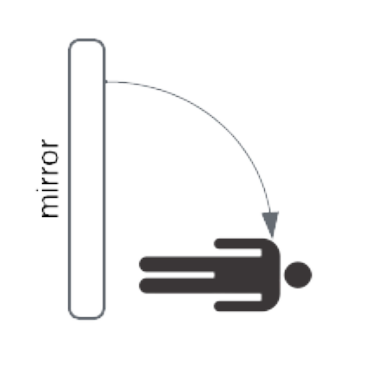
A standing mirror fell and shattered on my face.
POEM + ETYMOLOGY
AUTHOR NARRATION
Read by the author in the original English.
A PLACE TO PUT FEBRUARY
February has done you wrong? Pin your story beside mine.
Drag to explore · zoom to see the pins
A standing mirror fell and shattered on my face.
Add your story below.
A small calamity, a major disaster, or just a spectacularly bad day: tell us in a few lines. Your note will appear only after I approve it.
Please leave out names or details that could identify someone else. No account or email address is needed.
AN ETYMOLOGICAL RABBIT HOLE
From the poem’s adjective to a county in North Carolina: a small family of words where theater, magic, and nonsense meet.
THE WORD IN THE POEM
In the poem, ‘hokey’ suggests something corny, phony, or exaggerated past the point of conviction. The word entered American English in the early twentieth century from ‘hoke,’ a show-business verb meaning to overact or make a scene artificially theatrical.
Definition of ‘hokey’ →STAGE SLANG
‘Hoke’ appears to be a back-formation from ‘hokum.’ In show-business slang, ‘hokum’ meant stock devices, manufactured effects, or exaggerated acting calculated to provoke an audience response. It later broadened into a word for pretentious or contrived nonsense.
Definition of ‘hokum’ →MAGIC AND SHAM
The deeper origin of ‘hokum’ is unsettled, but it is often explained as a blend of ‘hocus-pocus’ and ‘bunkum.’ ‘Hocus-pocus’ has long been associated with conjurers’ formulas, trickery, and mock Latin. A famous theory derives it from ‘hoc est corpus’—‘this is the body’—in the Catholic Mass, although that connection remains disputed.
Definition of ‘hocus-pocus’ →PROPOSED ORIGIN, NOT CERTAINA SPEECH ‘FOR BUNCOMBE’
‘Bunkum’ traces back to Buncombe County, North Carolina. In 1820, Representative Felix Walker defended a long, irrelevant speech by saying that he was speaking ‘for Buncombe.’ The phrase came to mean empty talk and was shortened to ‘bunk.’ To ‘debunk’ something is, quite literally, to take the bunk out of it.
Definition of ‘bunkum’ →This is not a perfectly documented chain of descent: dictionaries agree on several steps but treat both the ‘hocus-pocus’ + ‘bunkum’ blend and the ‘hoc est corpus’ explanation with caution.
A CALENDAR OF DISCONTENT
A YouGov poll puts February near the very bottom of Americans’ emotional calendar—even if January usually wins the contest for least-loved month.
The net score in the chart subtracts dislike and hate from love and like. Every month remains net positive, but January and February trail the rest by a remarkable distance.
Source: YouGov, “Americans’ favorite and least favorite months of the year,” 2023.
READER DISCUSSION
This poem may have more to say.
Follow updates to this poem
No comments have been published yet. You can be the first reader to respond.