AUTHOR NARRATION
Hear the poem.
Read by the author in the original English.
Banach–TarskiEnglish narration
POEM + PARADOX
AUTHOR NARRATION
Read by the author in the original English.
THE POEM IN IMAGES
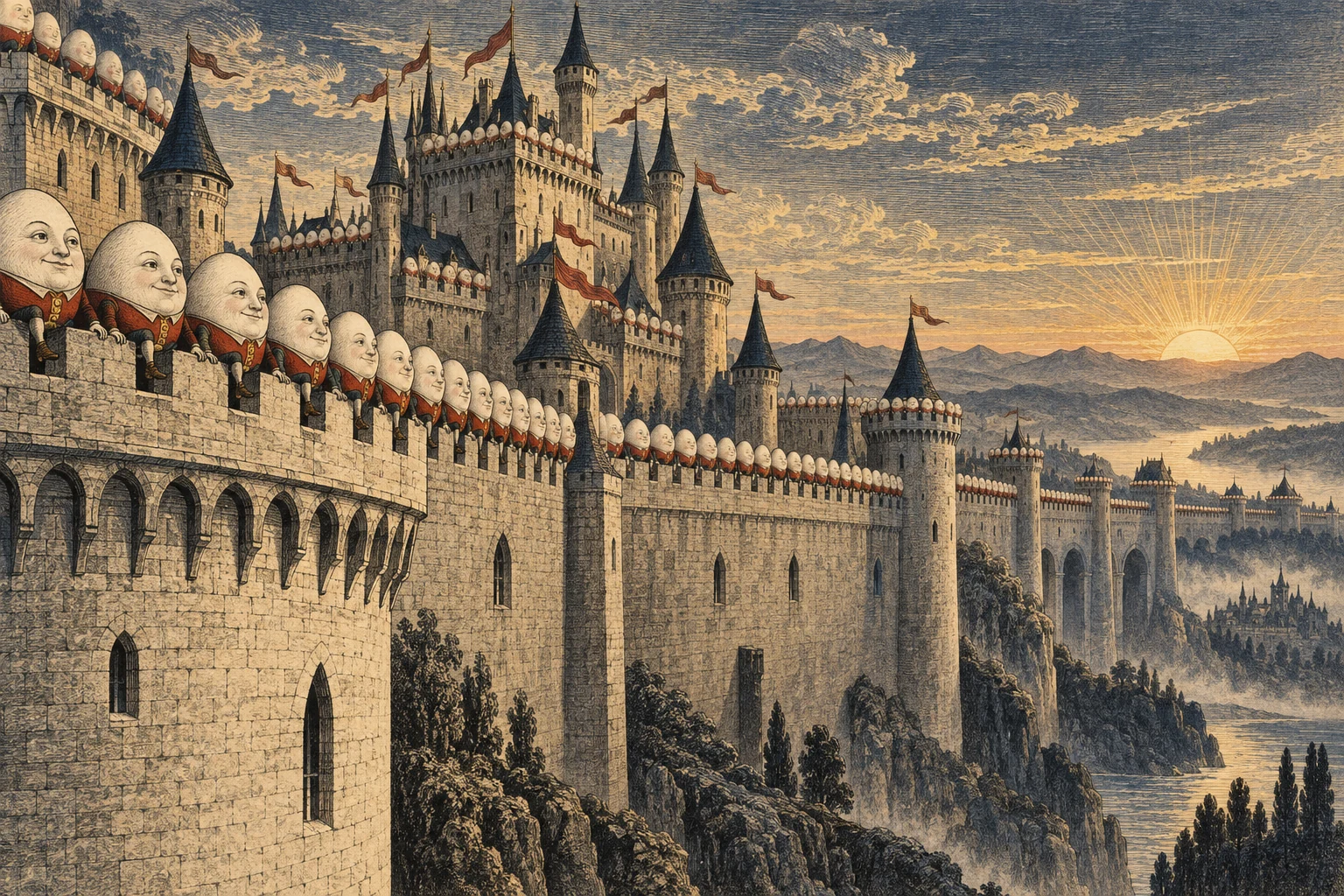
Five illustrations follow the poem as you hear it.
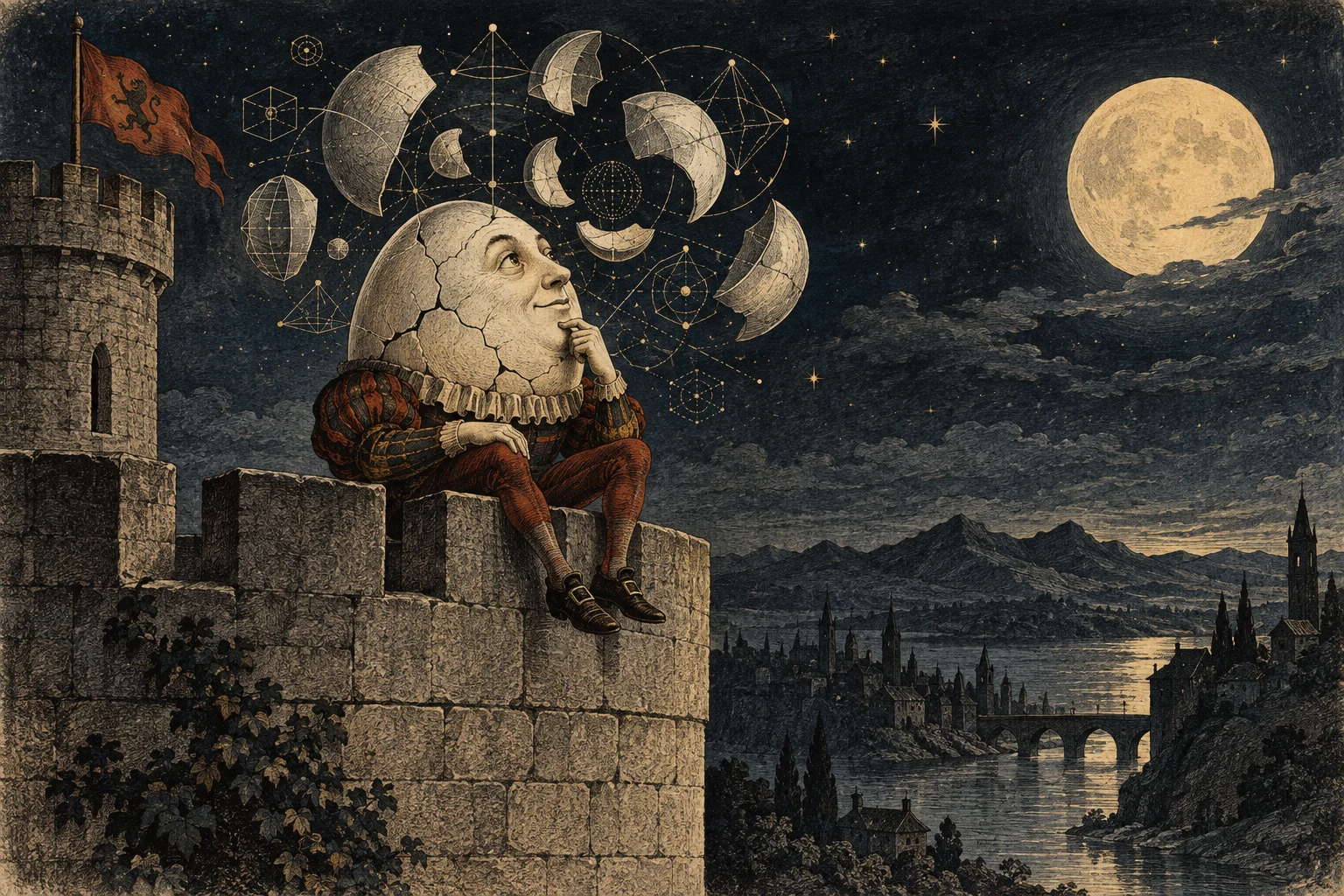
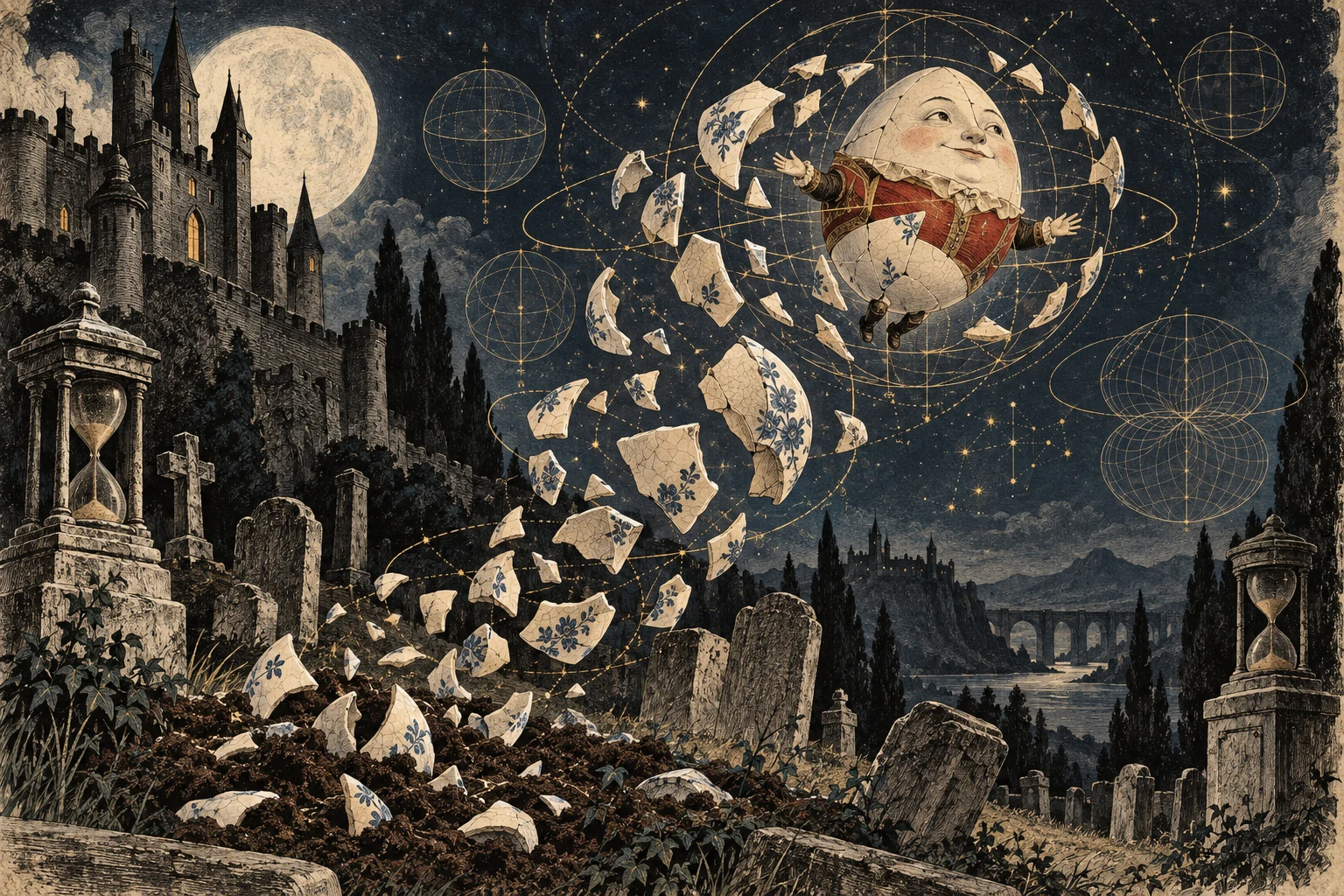
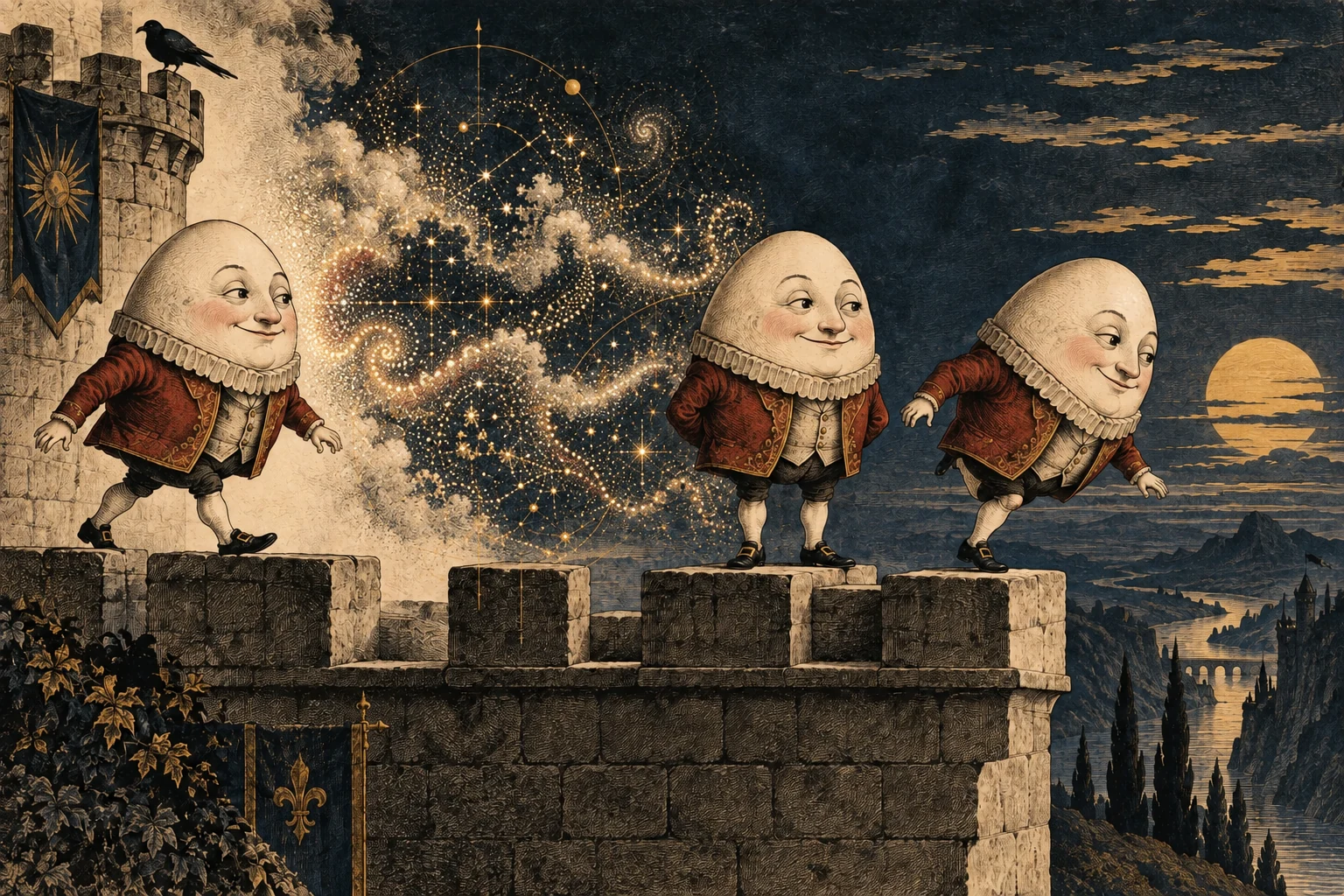
“Just picture the hatching comprehension,”
Play here or above and the images will follow the voice. Drag the timeline or choose a passage to revisit a moment.
THE ACTUAL MATHEMATICS
A solid ball can be divided into finitely many sets of points, and those sets can then be moved using only rotations and translations to form two solid balls, each the same size as the original. The “pieces” are extraordinarily irregular, non-measurable sets—not objects that could be cut from physical matter—so ordinary volume does not apply to them individually.
Assuming the axiom of choice, let A and B be bounded subsets of ℝ3 with nonempty interiors. There are finite partitions A = A1 ∪ ··· ∪ An and B = B1 ∪ ··· ∪ Bn, together with Euclidean isometries g1, …, gn, such that gi(Ai) = Bi for every i. In other words, A and B are equidecomposable.
Read a complete proof (PDF) →THE MATHEMATICIANS
In 1924, Stefan Banach and Alfred Tarski published the theorem that now bears their names.

/media/banach-tarski/stefan-banach.jpgPolish mathematician (1892–1945), founder of modern functional analysis and a leading figure in the Lwów School of Mathematics.

/media/banach-tarski/alfred-tarski.jpgPolish-American mathematician and logician (1901–1983), renowned for foundational work on truth, logic, set theory, and model theory.
Images: Stefan Banach, public domain; Alfred Tarski, photograph by George M. Bergman, GFDL 1.2 — Wikimedia Commons.
READER DISCUSSION
This poem may have more to say.
Follow updates to this poem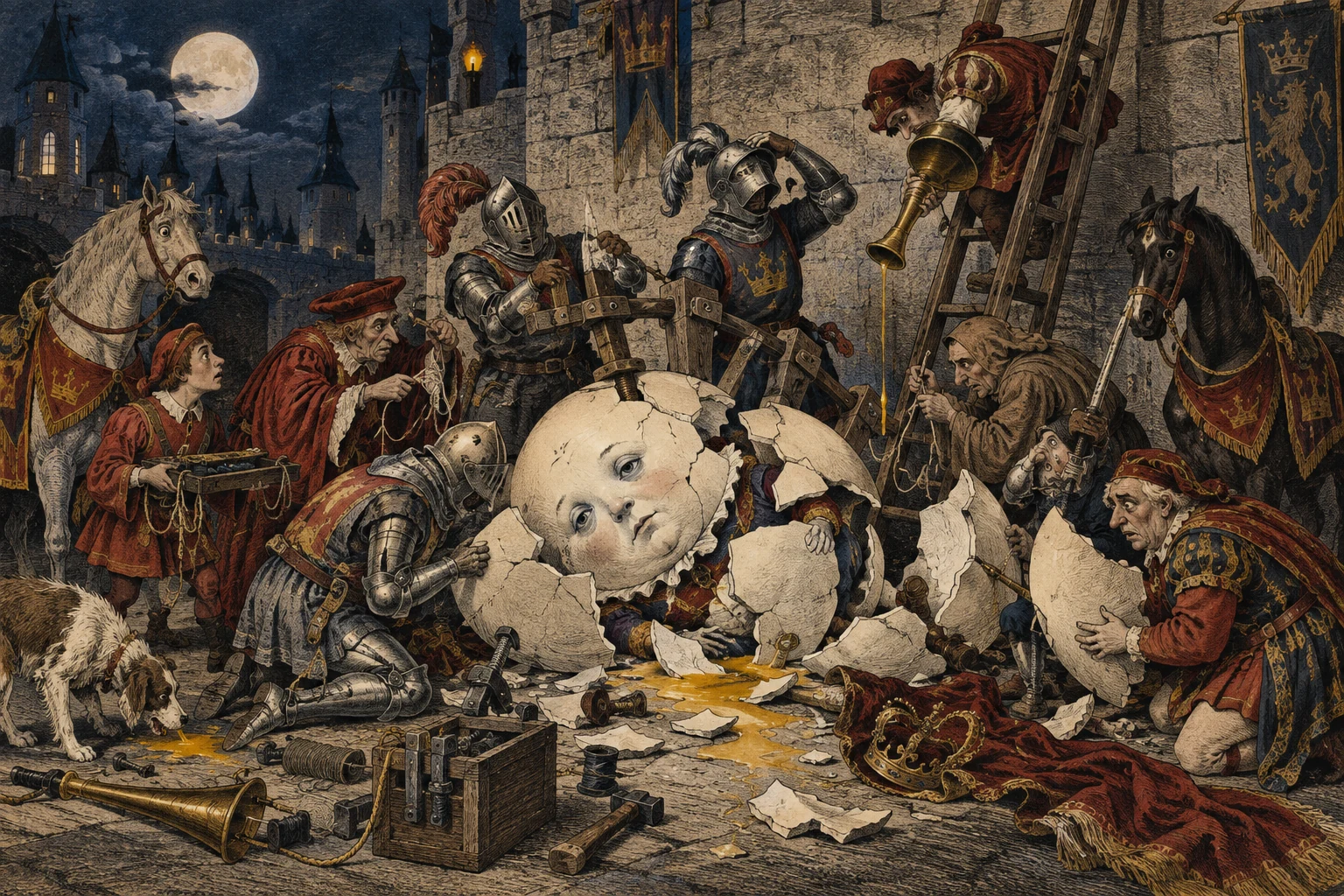
No comments have been published yet. You can be the first reader to respond.