INFINITE FAMILY
Cyclic groups of prime order
The simplest case: repeatedly applying one basic operation cycles through a prime number of positions.
POEM + BOOK
AUTHOR NARRATION
Read by the author in the original English.
AN ILLUSTRATIVE PARALLEL
This is not the botanical encyclopedia I was looking at, and it is not a photograph I took. But the open pages of this copy of Hortus Eystettensis—with their scale, age, and intricate plant illustrations—capture the kind of botanical beauty and grandeur I was commenting on in the poem.
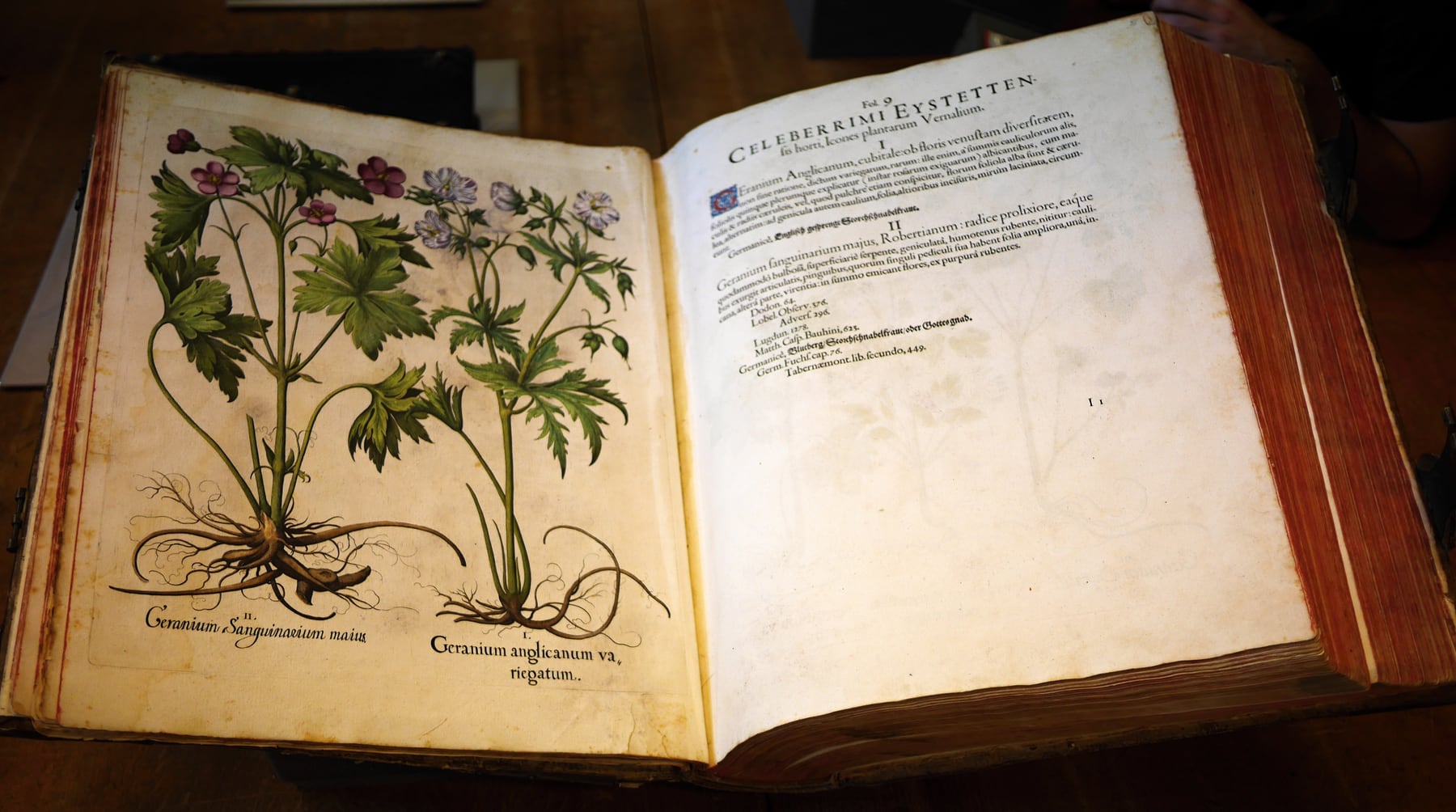
/media/botanical-encyclopedia/hortus-eystettensis-open-book.jpgBasilius Besler’s monumental botanical work, first published in 1613.
Photograph by J. Donvil, Library of the Université de Liège.View the source on Wikimedia Commons.Licensed underCC BY-SA 4.0.
THREE VISIONS FROM THE POEM
Click on any of the three poem fragments below to glimpse the botanical beauty within the book.

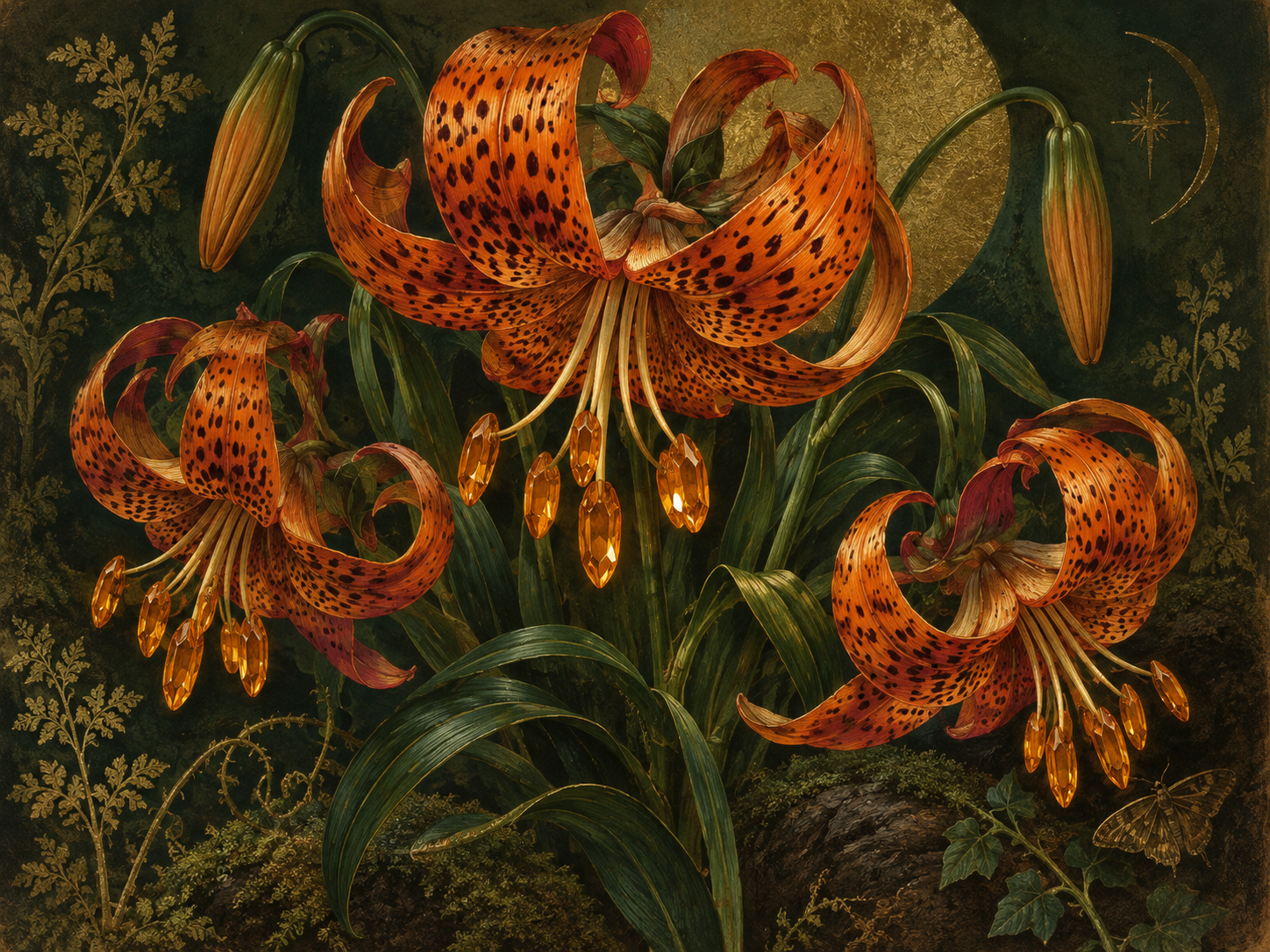


Select a fragment to open its image. Select it again to return to the encyclopedia.
THE CLASSIFICATION OF FINITE SIMPLE GROUPS
The poem’s “re-realized groups of finite simple symmetry” points toward the Classification of Finite Simple Groups: the enormous collaborative effort to identify every indivisible form of finite symmetry.
GROUP · FINITE · SIMPLE
In mathematics, a group records a collection of reversible operations and how they combine; symmetries are a central example. A finite group contains only finitely many operations. A simple group has no smaller nontrivial normal piece that can be factored out.
Through composition series, simple groups serve as the fundamental constituents of finite groups—an analogy often made with prime numbers, although their assembly is subtler than ordinary multiplication.
INFINITE FAMILY
The simplest case: repeatedly applying one basic operation cycles through a prime number of positions.
INFINITE FAMILY
The even permutations of n objects, simple once n ≥ 5.
INFINITE FAMILIES
Large families built from linear algebra over finite fields; they account for most finite simple groups.
26 EXCEPTIONS
Twenty-six exceptional groups that belong to none of the infinite families, culminating in the enormous Monster group.
The line compresses that vast achievement into an image: abstract forms of symmetry no longer merely imagined, but realized, sorted, and known.
AN ARMED ROSE, A NAMED ROSE
A novel that makes reason, desire, and language pieces of the same puzzle.
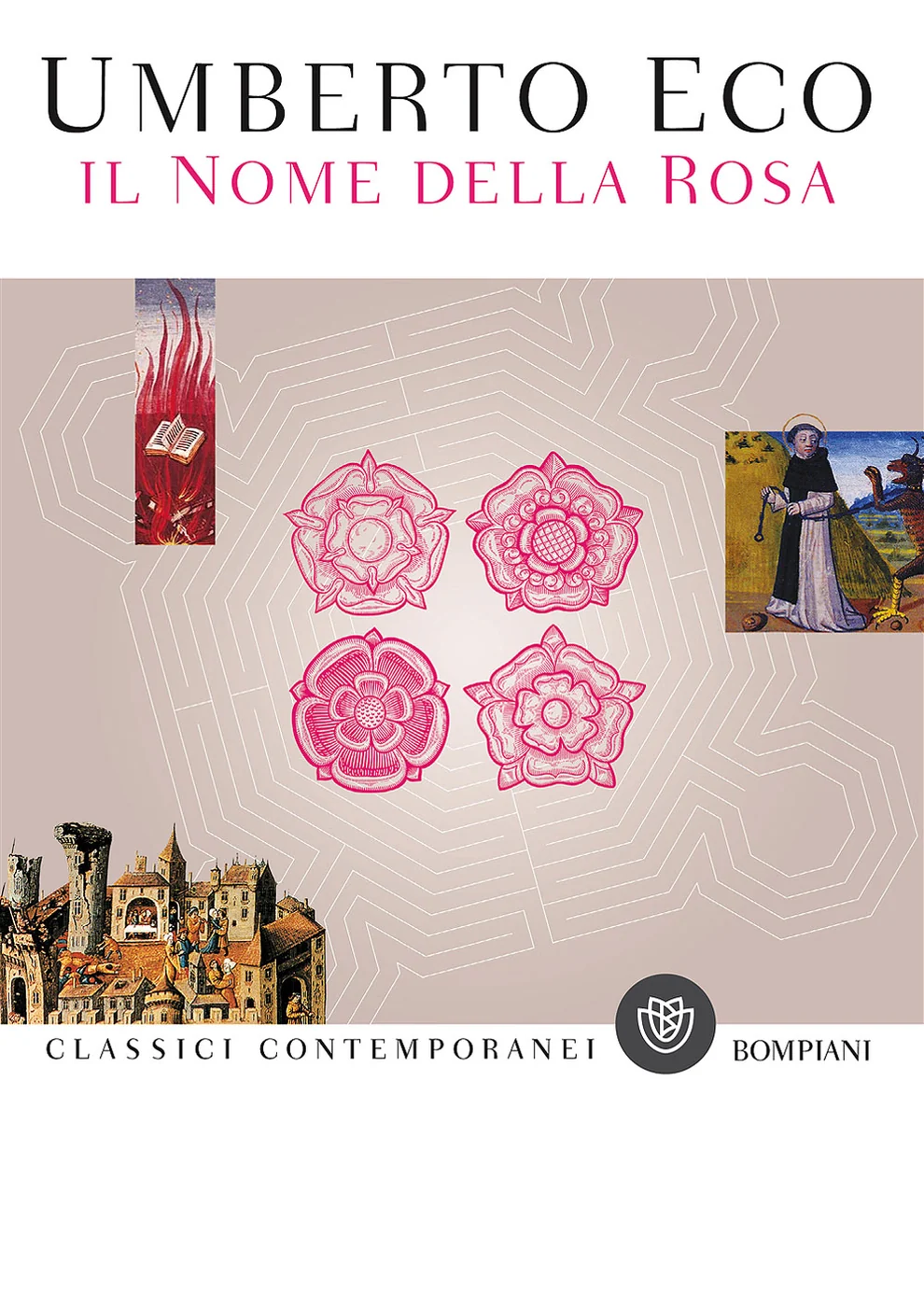
Speaking of, another book I'd highly recommend is Umberto Eco’s The Name of the Rose. This book resonated with me greatly in its beautiful braiding of many themes close to my heart: reason, epistemology, linguistic ambiguity, wordplay, and even gay hook-ups.
The book prominently features an elaborate labyrinth-libraryOoh, I really like this. comprised of 56 rooms. Each has a scroll with a verse from the Book of Revelations, and is mapped to the first letter of that verse. From this, the library's designers (and, metatransitively, the author of the book) defined an intricate organizational scheme based on words built from sequences of adjacent rooms' letters.
THE LIBRARY IS A LETTER PUZZLE
Inside the abbey’s aedificium, the initials of inscriptions in neighboring rooms spell the names of regions. Those names help locate the books. Choose a name below to find its letters on the actual plan.
This is the word that helps William and Adso decipher the plan. They find writers from the far north here, but also grammarians and rhetoricians: intellectual kinship sometimes matters more than an author’s birthplace.
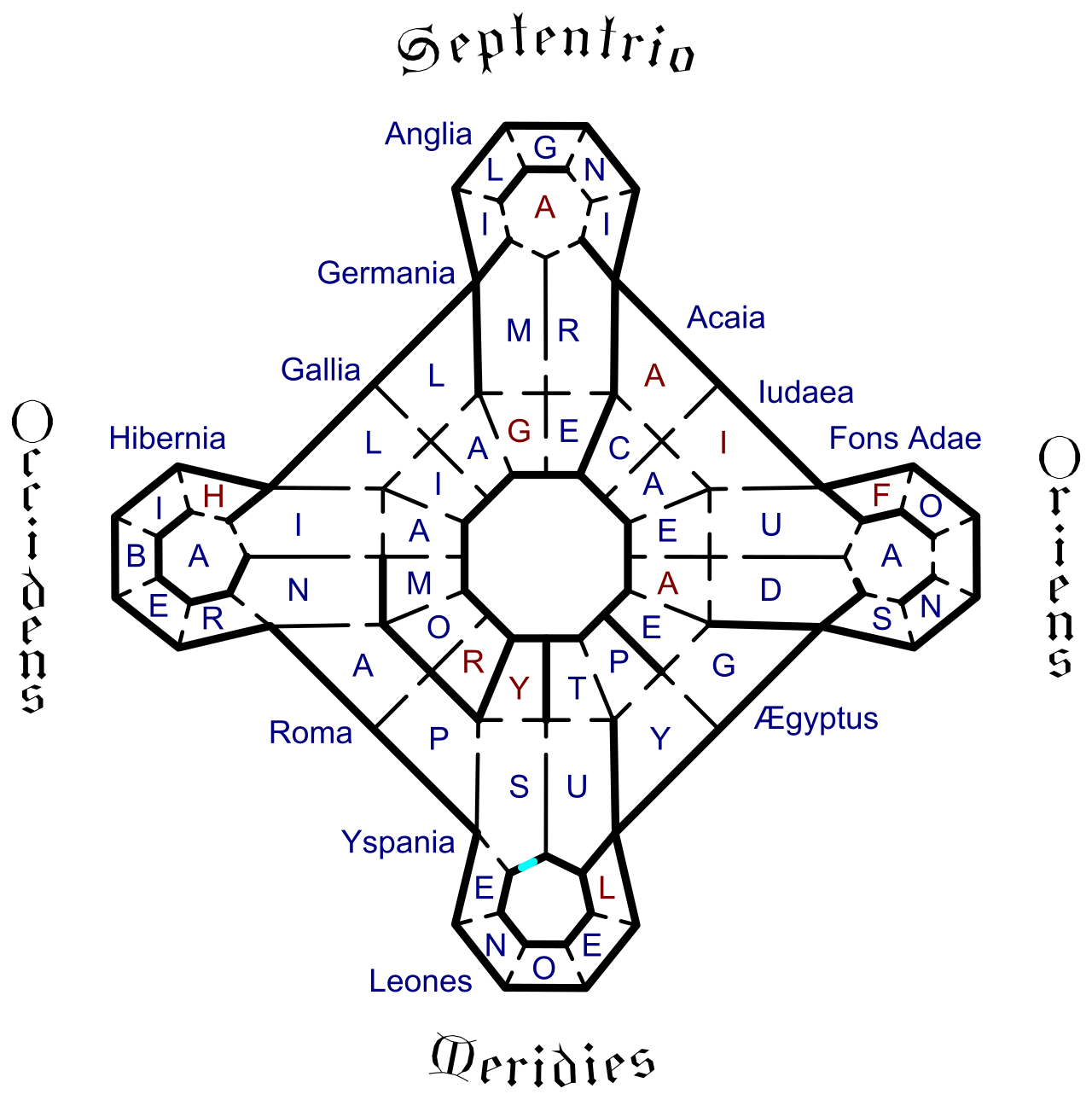
Original diagram: Labyrinthus Aedificium by Umberto Eco / Bompiani, via Wikimedia Commons. WebP conversion and interactive highlights by A.F. King. Adapted image licensed under CC BY-SA 4.0.
The details about what the rooms hold are paraphrased from Eco’s novel; they are not an exhaustive inventory of the library.
Further reading:The History of Cartography, on Eco’s library map
READER DISCUSSION
This poem may have more to say.
Follow updates to this poem
No comments have been published yet. You can be the first reader to respond.